RF Site Surveys: Getting Wireless and Comms Right the First Time
Many wireless and RF problems begin with map-only planning. Here is what an RF site survey covers and why reliable signal depends on it.
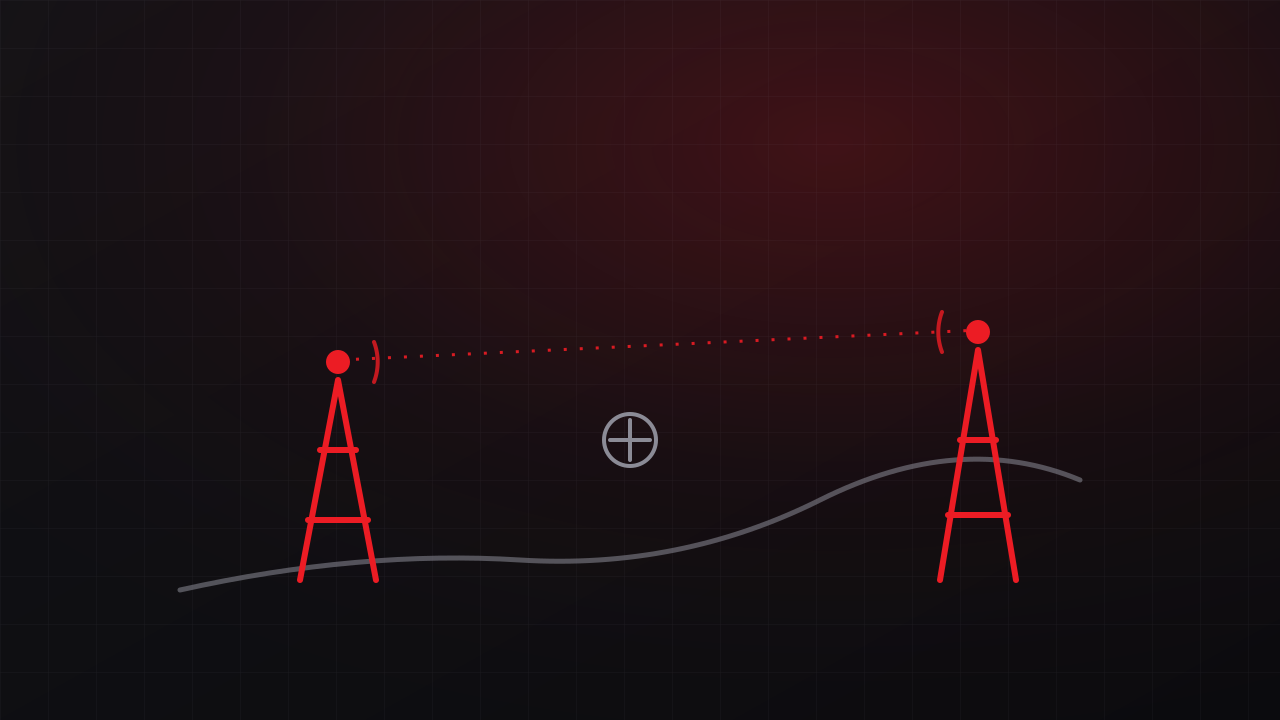
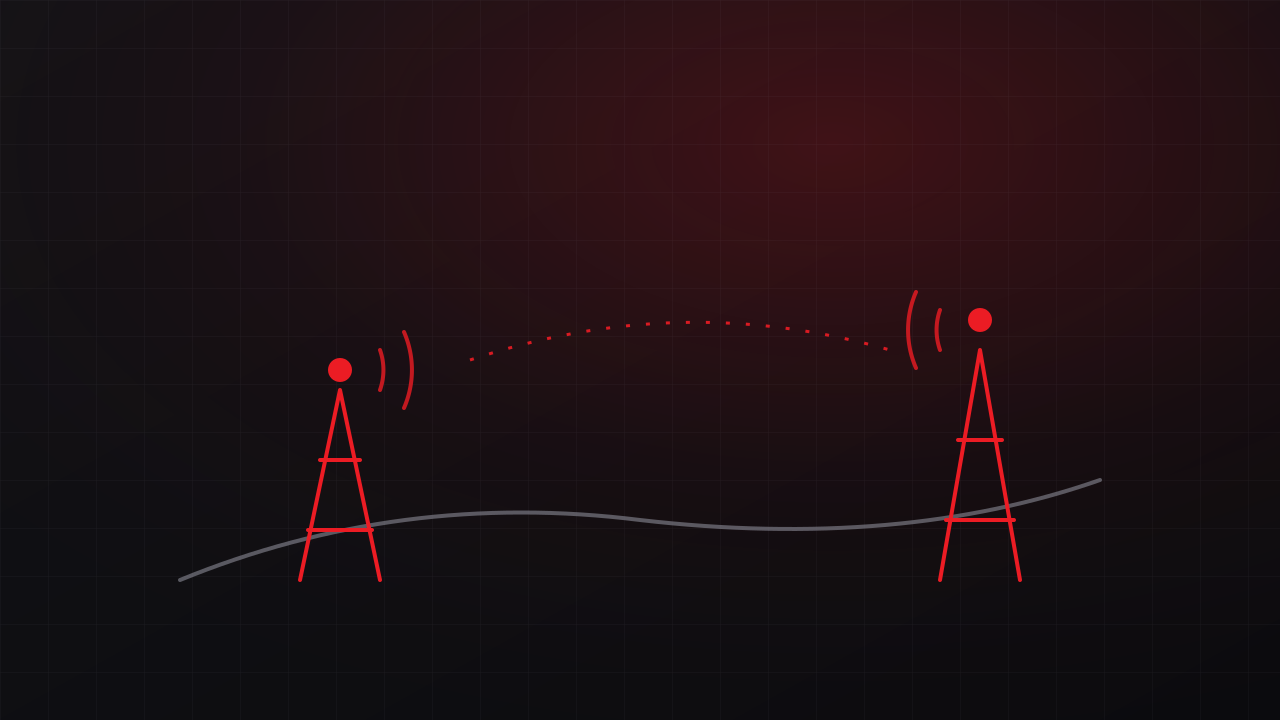
The single most common reason a wireless link or a communications system underperforms is that nobody surveyed the site. Someone drew a line on a map, saw two points that looked close, and assumed a signal would make the trip. Radio does not care what the map says. It cares about terrain, obstructions, interference, and physics, and the only way to know what you are actually working with is to go measure it.
What an RF site survey actually is
An RF site survey is the engineering step where you replace assumptions with measurements before you commit to a design. Depending on the project, it involves:
- Line-of-sight and path analysis: confirming the signal path is clear, accounting for terrain, buildings, trees, and the curvature of the earth over distance.
- Spectrum and interference checks: finding other transmissions in the area so the design accounts for noise.
- Signal and coverage measurement: testing real signal strength at the locations where equipment and users will operate.
- Mounting, power, and environment: where antennas can physically go, how they get power, and what weather and access the site will subject them to.
Why reliable RF starts with measurements
Wireless and RF fail at the margins. A link planned from a map might work on a clear spring day and drop when trees leaf out, temperatures swing, or a new tenant starts transmitting nearby. A survey based on real measurements and worst-case conditions supports a link that performs reliably over time.
This is true whether it is a fixed wireless internet link reaching an underserved site or communications and RF engineering for a mission environment where a weak signal is a mission risk. Our communications and RF engineering work starts the same way every time: survey, calculate, then design.
The documentation pays for itself later
A good survey informs the design and establishes a troubleshooting baseline. When a link degrades a year later, the original measurements help identify changes in the environment or equipment.
Getting it right the first time
Antennas, radomes, RF systems, and wireless links are a core part of what GTech’s engineering practice does, and we treat RF the way we treat power and controls, as an engineering discipline with measurements behind it. If you have a site that needs connectivity or a communications system that keeps underperforming, start with a conversation and we will tell you what a survey would show.