How Mission-Critical Facility Engineering Differs from IT
Engineering a facility where failure scrubs a mission is a different job than running an office network. Here is what changes when reliability is non-negotiable.
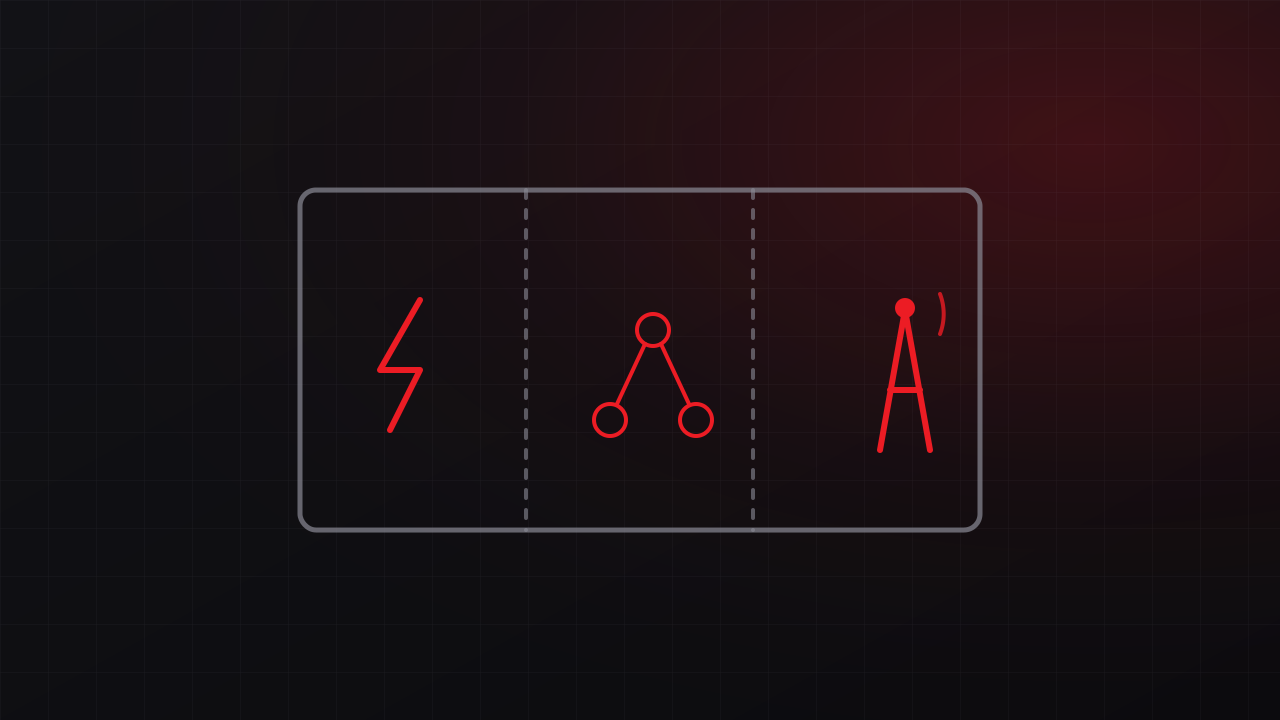
Mission-critical facilities operate with very little tolerance for delay or failure. When a facility processes satellites, distributes mission-critical power, or carries a signal the mission depends on, a failure can scrub an operation. That consequence changes how you engineer everything.
Reliability starts in the design
Mission environments require reliability to be engineered up front through redundant paths, segmented architectures, and tested failure modes. We design and commission against defined acceptance criteria before the system carries the mission.
Documentation is part of the deliverable
On commercial IT, documentation is a nice-to-have that slips. On mission work, an undocumented system is an unacceptable system. Configuration records, acceptance test results, and design documentation are handed over as part of the job, because the people who operate and troubleshoot the facility for the next decade need them, and because the program requires them.
Everything is separated on purpose
A flat facility network allows problems and intruders to move among operational, security, and business systems. Mission facilities separate these systems deliberately. We bring the same discipline to industrial OT/IT boundaries.
You are one contractor among many
Mission facilities run on coordination: primes, subcontractors, and government stakeholders all touching the same site under the same security and schedule constraints. Engineering support here means fitting into that structure: meeting the prime’s requirements, coordinating with other trades, and delivering to a schedule driven by launch windows that do not move. Our engineering support on a government space program was exactly this kind of work.
Why it makes the rest of our work better
GTech’s team spent 30+ combined years supporting operations at Vandenberg Space Force Base. That aerospace and mission-critical background established our habits: design reviews, labeled infrastructure, tested failovers, and clear documentation. We apply them to systems that launch payloads and those that run a 20-person office. If your facility cannot afford downtime, let’s talk about engineering it that way from the start.