What PLC and SCADA Integration Actually Involves
PLC and SCADA integration is more than wiring a panel. Here is what industrial control and automation projects actually involve, and where they go wrong.
“Can you automate this?” is usually where an industrial control project starts: a manual valve, a gate that someone has to drive out to operate, a process that depends on a person watching a gauge. The answer is often yes. The part that gets underestimated is everything between the question and a system you can trust with critical infrastructure.
Here is what a real PLC and SCADA integration involves.
The PLC is the easy part to name and the hard part to get right
A programmable logic controller (PLC) is the small, rugged computer that reads inputs such as sensors, switches, and level gauges, then drives motors, valves, gates, and other outputs according to programmed logic. Wiring one in is straightforward. Writing control logic that behaves correctly when a sensor fails, a signal drops, or two conditions collide is where the engineering lives.
Good control logic is designed for the bad day: what the system does when it loses input, how it fails (safely, we hope), and how an operator takes manual control when they need to. That is a design exercise before it is a programming one.
SCADA is how you see and supervise it
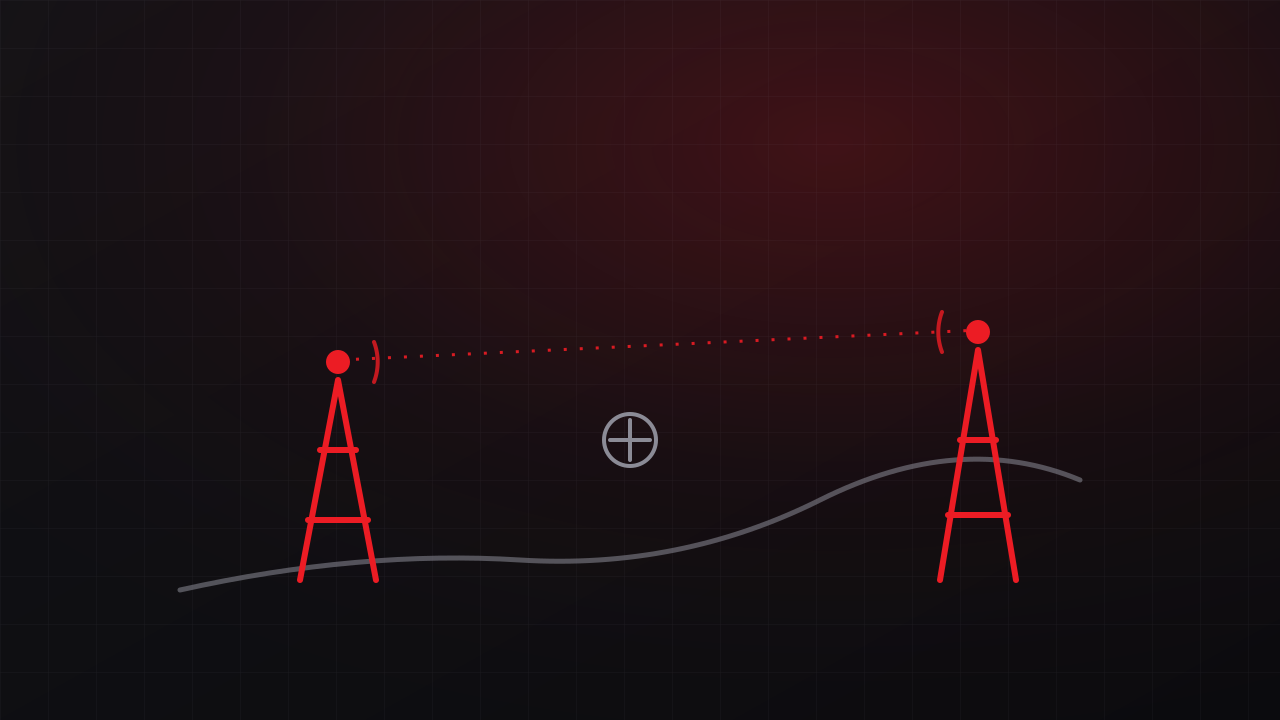
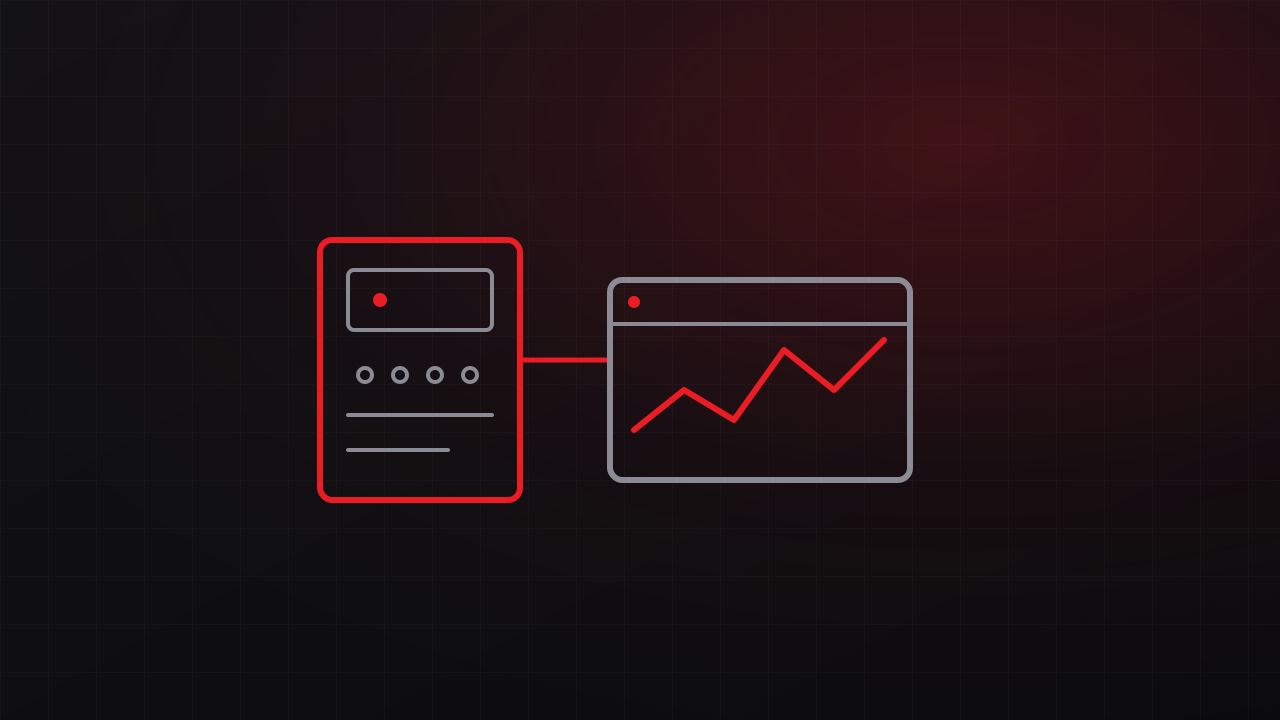
SCADA, or supervisory control and data acquisition, is the layer of screens, alarms, trends, and remote access that lets operators see what equipment is doing and step in when needed. For a remote site, this is often the whole point. A reservoir gate or a pump miles from anyone is only as reliable as your ability to know its state and change it without a truck roll.
SCADA needs purposeful configuration. Unconfigured alarms, unused historians, and dashboards that show “green” without verifying the underlying sensor create false confidence.
Where these projects go wrong
- No documentation. Control logic that lives only in one integrator’s head is a liability. When we deliver a control system, the logic, I/O, and network are documented so the next person, including your own staff: can support it.
- OT and IT bolted together carelessly. Connecting control systems to business networks and the internet is often necessary for remote monitoring, and it creates an important security boundary. The connection needs deliberate segmentation. This is the same OT/IT boundary we design for across field and industrial sites.
- Missing commissioning. Control of critical infrastructure requires testing against defined criteria before handover.
Why we approach it as engineering
GTech runs a dedicated engineering and integration practice across electrical systems, PLC and automation, SCADA, and controls. Our aerospace and federal experience shaped its disciplined approach to critical systems. Our PLC-driven automation project for a Central Coast water district shows what that looks like end to end.
If you have a manual process or an aging control system that nobody supports, that is a conversation worth having: reach out and we will tell you honestly what automating it would take.