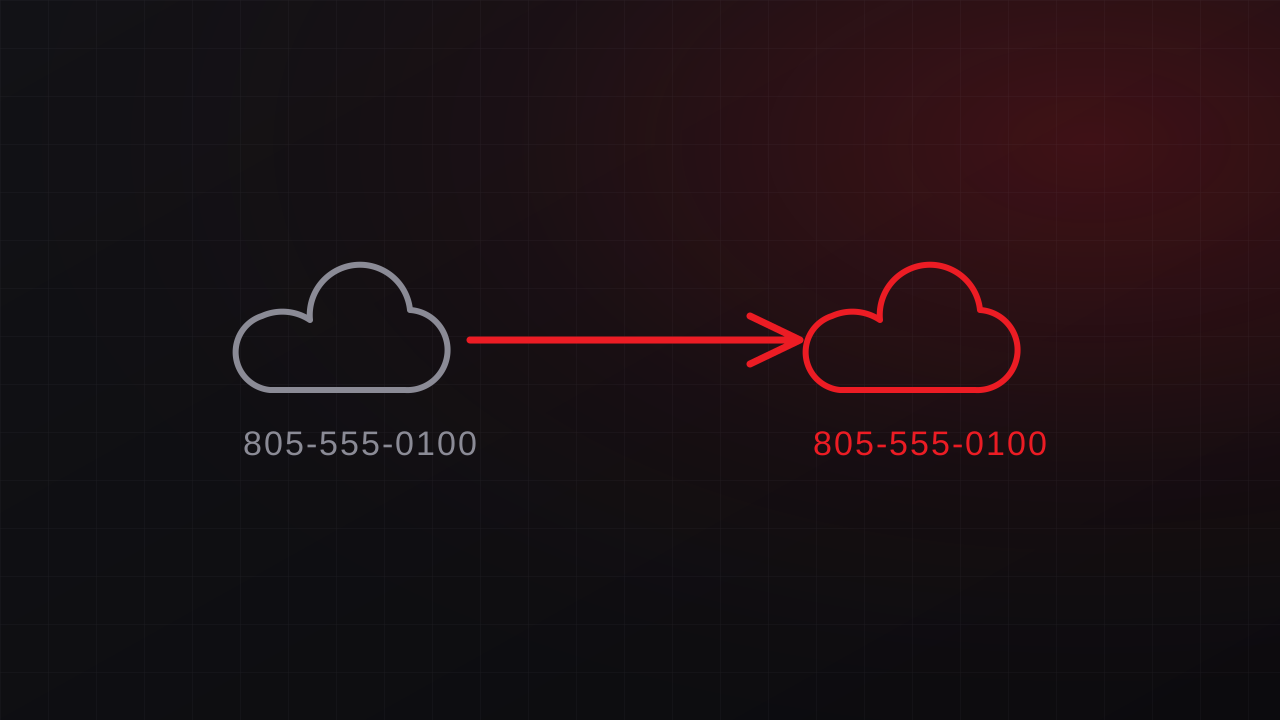
What to Do When Your VoIP Provider Goes Out of Business
If your VoIP provider shut down or stopped responding, act fast: your numbers can usually be saved. A step-by-step plan for recovering business phone service.

It happens more often than most business owners realize: a small VoIP provider stops answering support tickets, the billing portal goes dark, and one day the phones just don’t work. Whether the company formally closed or simply went unresponsive, you’re left running a business on a phone system nobody supports.
Here’s the good news up front: in most cases your phone numbers can be recovered — if you act while they’re still active. Here’s the plan.
1. Don’t cancel anything yet
Your instinct may be to stop paying and walk away. Don’t — not yet. If your numbers are still routing calls, they’re still active with an underlying carrier, and active numbers are far easier to port than disconnected ones. Keep everything running until your numbers are safely transferred.
2. Gather your documentation
Porting requests are matched against the losing provider’s records. Collect:
- A recent invoice or bill showing your account number and service address
- The complete list of phone numbers your business uses (don’t forget fax lines, alarm lines, and rollover numbers)
- Any online portal access you still have
If you have none of this, recovery is still usually possible — it just takes more carrier legwork.
3. Identify the underlying carrier
Most small VoIP companies don’t own numbers; they resell service on top of a wholesale carrier. That carrier still holds your numbers even if the reseller has vanished. Identifying it is the key step, and it’s where an experienced partner earns their keep — we do this routinely for former customers of unresponsive providers.
4. Start the port immediately
Once you’ve chosen a new provider, submit port requests for every number. Your right to move your number is protected in most situations, and the losing provider’s cooperation is usually not required — the request is processed between carriers. Expect simple ports to take a few business days, complex ones longer.
5. Set up interim routing
If service is already failing, a new provider can often stand up temporary call forwarding or a cloud number so customers still reach you while ports complete. Missing a week of calls costs more than any migration.
6. Choose a platform with a future
When you rebuild, pick a provider that won’t repeat the story. Look for financially stable platforms (Zoom Phone is a common choice), transparent account ownership — you should control your own numbers and portal — and local support you can actually reach. Our guide to choosing a business phone provider covers the questions to ask.
Get help before numbers disappear
Disconnected numbers eventually return to carrier pools and can be reassigned — at that point, recovery may be impossible. If your provider has gone quiet, treat it as urgent even if the phones still work today.
GTech’s business phone team handles provider-failure rescues regularly, including for former Rimrock Technology Solutions customers: number recovery, carrier escalation, and migration to a supported platform. The consultation is free — call 805-979-9897.